U.S. Department of Justice Rules on Assistance Dogs to Become Stricter March 15, 2011

James J. McDonald, Jr., managing partner, Fisher & Phillips, LLP wrote a good summary about the March 15 changes impacting U.S. assistance dogs. His summary is listed below. It’s long but I found it to be very informative.
Regulations issued in 1991 following the enactment of the Americans with Disabilities Act required that public accommodations (which include restaurants, hotels, retail establishments, theaters, and concert halls) modify their policies, practices, or procedures to permit the use of a service animal by an individual with a disability.
Essentially this means that service animals accompanying persons with disabilities have to be admitted to establishments with policies that otherwise exclude pets or other animals.
When the ADA was enacted, most service animals were “seeing-eye” dogs that assisted blind or sight-impaired persons. In most cases, these dogs were highly trained and, because of their extensive training, were not likely to create a nuisance or a sanitary problem.
Over time, however, a variety of species came to be characterized by their owners as service animals, including pigs, horses, monkeys, snakes, lizards, birds, and rodents. Also, dogs and other animals that merely provide emotional comfort to their owners also have been characterized as service animals.
This proliferation of creatures claimed to be service animals has posed obvious problems for many restaurants and hotels in terms of safety, sanitation, and disturbance of other guests. Until now, however, proprietors were largely powerless to bar these types of animals from their establishments.
The U.S. Department of Justice has issued new regulations effective March 15, 2011, however, which will substantially limit the types of animals that will qualify as service animals under the ADA.
First, only dogs (and miniature horses in some cases) will qualify as service animals under the new regulations. “Other species of animals, whether wild or domestic, trained or untrained,” will not qualify. The new regulations, however, do not place limits on breed or size of dog.
Second, the dog must be “individually trained to do work or perform tasks for the benefit of an individual with a disability, including a physical, sensory, psychiatric, intellectual, or other mental disability.” The regulations go on to state that the work or tasks performed by the service animal must be directly related to the handler’s disability. Examples of work or tasks set forth in the regulations include:
a. Assisting sight-impaired persons with navigation or other tasks
b. Alerting hearing-impaired persons to the presence of people or sounds
c. Providing nonviolent protection or rescue work
d. Pulling a wheelchair
e. Assisting an individual during a seizure
f. Alerting an individual to the presence of allergens
g. Retrieving items such as medicine or the telephone
h. Providing physical support and assistance with balance and stability to individuals with mobility impairments
i. Helping persons with psychiatric and neurological disabilities by preventing or interrupting impulsive or destructive behaviors
Under the new regulations, the mere “provision of emotional support, well-being, comfort, or companionship does not constitute work or tasks” for purposes of the definition of service animal. Thus, animals that provide only comfort or emotional support for their owners will no longer qualify as service animals.
For a dog to qualify as a service animal to an owner with a psychiatric disability under the new regulations, the dog must be trained to perform specific work or tasks. Examples given in the guidance accompanying the new regulations of tasks performed by psychiatric service animals include reminding the handler to take medicine, providing safety checks or room searches for persons with posttraumatic stress disorder, interrupting self-mutilation, and removing disoriented individuals from dangerous situations.
The guidance also states that a dog that is used to “ground” a person with a psychiatric disorder will qualify as a service animal if the dog has been trained: (1) to recognize that a person is about to have a psychiatric episode and (2) to respond by nudging, barking or removing the person to a safe location until the episode subsides.
The new regulations additionally clarify that “attack dogs” trained to provide aggressive protection of their owners will not qualify as service animals. The crime-deterrent effect of a dog’s presence, by itself, does not qualify as “work” or “tasks” for purposes of the service animal definition.
The new regulations also formalize prior Justice Department technical assistance addressing the use and handling of service animals. The regulations provide that a public accommodation may ask an individual with a disability to remove a service animal from the premises if the animal is not housebroken, or if the animal is out of control, and the animal’s handler does not take effective action to control it. (Ordinarily, the regulations state, a service animal shall have a harness, leash, or other tether, unless the person with a disability is unable to use a harness, leash, or tether or the use of such a device would interfere with the animal’s ability to perform its work or tasks.) If a service animal is removed for any of these reasons, the person with a disability must still be permitted to access the establishment’s goods, services, or accommodations without the animal being present.
The regulations also confirm that a public accommodation is not responsible for the care or supervision of a service animal.
The regulations provide that a public accommodation may not ask about the nature or extent of a person’s disability, but that it generally may make two inquiries to determine whether an animal qualifies as a service animal; it may ask: (1) if the animal is required because of a disability, and (2) what work or task the animal has been trained to perform. These inquiries may not be made, however, when it is readily apparent that the animal is a service animal, such as where a guide dog is guiding a blind person or a dog is pulling a wheelchair.
Furthermore, a public accommodation may not require documentation, such as proof that the animal has been certified, trained, or licensed as a service animal. Nor may a public accommodation require a person with a disability to pay a surcharge for a service animal, even if it applies such a surcharge for pets.
These regulations will not apply to landlords or airlines, which are governed by the Fair Housing Act and the Air Carrier Access Act, respectively. It is also not yet clear that these regulations, and particularly the definition of a service animal, will be applied by courts to cases brought under Title I of the ADA which covers employment.
A good argument may be made, based on existing case law, that a stricter standard would apply under Title I. Unlike under Title III, where a dog must be allowed onto the premises if it qualifies as a service animal and does not leave a mess or cause a serious disturbance, an employee under Title I of the ADA is entitled only to such accommodations as are necessary to enable him or her to perform the essential functions of the job.
An employee, therefore, will likely need to show that the presence of a service animal is needed for the employee to be able to perform his or her essential job duties. An animal that provides only comfort or emotional support to an employee, but that is not needed in order for the employee to be able to work, will not likely qualify as a reasonable accommodation under Title I of the ADA.
These new regulations give long-needed clarity to hotels, restaurants, retailers, and other public accommodations regarding which animals must be allowed as service animals, and under what circumstances. No longer will these establishments need to allow patrons to bring exotic, dangerous, disruptive, or unsanitary animals with them as purported “service animals.”
James J. McDonald, Jr. is managing partner of the Irvine, Calif. office of the national labor and employment law firm Fisher & Phillips LLP (www.laborlawyers.com).
Pseudo-Assistance Dogs Jeopardize Hard-won Rights for Real Service Animals

I saw a news item the other day in the New York Post about Hollywood celebrity Candy Spelling (mother of Tori and widow of TV producer Aaron) bringing her dog, Madison, a Wheaton Terrier, into a New York restaurant wearing a “service dog jacket.”
Is this dog really trained and certified as some type of assistance dog? I really have no way of knowing, but hearing about this incident just reminded me of how more and more I’ve been hearing about people trying to pass off pets as assistance animals.
I’ve even had friends ask to borrow my assistance dog’s backpack so they might be able to bring their pet to some event or into some business. I’ve always said, “Sorry, but no.”
It’s an image and reputation thing. If your pet has not gone through the rigorous training that “real” assistance dogs must obtain, he or she probably won’t be able to behave well enough in public. It’s hard for us who really rely on our assistance animals to condone your desire to have your pet with you everywhere. No matter how much you love them, you really don’t require them the way we do.
For over 75 years, Assistance Dogs have worked successfully in public and won the public’s acceptance by achieving high behavioral and training standards, which set them apart from pets and other animals. Assistance Dogs International, Inc. publishes minimum standards for assistance dog training programs to ensure the highest level of quality in assistance dog performance.
An ill-behaved “pretend” assistance dog gives all the real ones a bad reputation. If there are any incidents, it just makes people feel justified in denying access to a dog in the future, whether it is truly a trained assistance animal or not.
But it’s hard to know which dogs are “real” and which aren’t. If a business owner or someone else suspects that a dog is not really an assistance dog, but just a pet, what are they to do?
Not all people with disabilities are easy to visually identify. It’s not always people with guide dogs out there or those of us in wheelchairs these days. Think about the military veterans with PTSD and their dogs. Or those with hearing loss or autism. Can you tell if the man, woman or child with the dog is truly disabled and if their dog is truly an assistance animal?
What if a business owner confronts someone and they’re wrong? Or what if the customer makes a scene, even if their dog is really a pampered pet. Is the customer always right, no matter what?
People can train their own dogs, too, according to the Americans with Disabilities Act, so who certifies or decides which assistance dogs are genuine and which are fakes?
Here’s my fear: Passing your pet off as an assistance dog not only gives the real ones a bad image, it might jeopardize the hard-won rights of people who really need assistance dogs. If there are enough bad incidents, will someone try to enact legislation changing the access laws?
I remember back in the early 90s, three years after the ADA was enacted, when I got my first service dog, Ramona. I was stopped a lot and told things like, “You can’t bring that dog in here.” Nowadays I feel more confident traveling in my state and across the US, but I don’t want things to revert back due to the issue of pseudo assistance dogs.
This is a very real issue that I feel really needs to be discussed. I’d love to hear your thoughts.
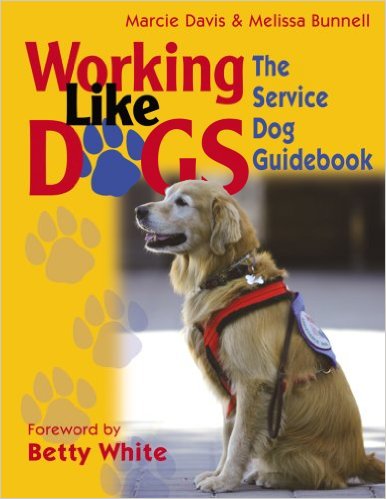
Here’s an article on the topic that just came out on Disability Scoop and another article from the Wall St. Journal. We discuss assistance dog standards in our book Working Like Dogs: The Service Dog Guidebook.
Current Assistance Dog Legislation

As a member of an assistance dog team, I know I sometimes take for granted all of the policy and administrative decisions that are being discussed and implemented. These laws and policies are very important, as they can directly impact our ability to function in public as effective assistance dog teams. Recently I heard about two legislative proposals directly related to assistance dogs that I think are of interest.
Representative seeks to designate National Assistance Dog Week in Hawaii
The first is from Hawaii Representative Corinne Ching. Representative Ching has proposed House Bill 1596 which would formally designate the second week of August as National Assistance Dog Week in Hawaii.
Representative Ching needs your support for this assistance dog specific legislation. She encourages people from throughout the United States to email her at repching@capitol.hawaii.gov and weigh in on her endeavor to make Hawaii the first state to declare NADW (www.assistancedogweek.org) an official holiday! Even a short message saying you approve of this recognition and the public education opportunity it supports will be appreciated.
Penalties for owners of dogs that attack service animals
Secondly, Pennsylvania Representative John Evans has introduced House Bill 165 which creates civil and criminal penalties for dog owners if their pet kills or maims a service animal. This legislation allows for fines of up to $1,000 and jail time of up to two years, and would require those convicted to pay veterinary and replacement costs.
This legislation is now headed for the Pennsylvania House floor for consideration. I don’t know if you and/or your assistance dog have ever been attacked. I can tell you that my service dog, Ramona, and I were on business in Washington, D.C. and were attacked by a dog while approaching the elevator to the Metro. It was quite a shocking experience because this dog suddenly came from out of a local business located near the Metro elevator.
Luckily, my husband Franz was with me and his quick actions saved Ramona’s life. Ramona suffered post traumatic stress from that moment on. So from a personal perspective, I can really appreciate Representative Evans’ leadership to hold pet owners accountable in such unfortunate incidents. You can connect with Representative Evans’ office through Jennifer Keaton at jkeaton@pahousegop.com or through his Facebook page.
We are all so busy with our everyday lives but I think it is important that we try to pay attention to current legislation that will impact our ability to work and thrive in public as individuals with disabilities with our assistance dogs. Do you know of any other legislation that is currently being proposed in your state that we should be tuned into?
Growing Up Guide Pup

What a lucky dog! One-year-old guide dog in training Ricki spent her birthday at Disneyland in California, but took a break with her people, Matt and Amie Chapman, to talk to me and Whistle on the Working Like Dogs show recently.
Matt and Amie are producing a weekly video series on YouTube called Growing Up Guide Pup, which captures the lessons they’re teaching Ricki, and they told us how they got started with the video series. They’re not only experienced puppyraisers for Guide Dogs for the Blind, but Matt also is a video producer. They combined their interests in their successful video series.
I really respect Matt and Amie for all their hard work being puppyraisers, giving so much of their time to give guide dog puppies a solid foundation for their training. Their idea to start a video blog about puppyraising is unique, and they have lots of viewers on You Tube who seem to be fascinated and eagerly awaiting each week’s new episode.
The videos are produced to be accessible to those who are blind or have vision limitatations, with a simple format and voiceover narration explaining everything that’s happening.
Find out if you might be ready to be a puppy raiser as they share their experiences, the challenges and rewards. You can also hear more about how they raise puppies and how they created their video series on their Working Like Dogs show, episode #45.
To see Matt and Amie Chapman’s video series, go to the Guide Dog Maniac channel on You Tube. You can view the entire Growing Up Guide Pup series, including the episode where Ricki goes to Disneyland and the short special where she meets Donald Duck and Mickey Mouse.
Happy Birthday Betty White!

Actress-comedian and assistance dog champion, Betty White celebrates her 89th birthday today! What a role model and tireless advocate for assistance dogs and all animals everywhere.
We can all take a lesson in life from this bubbly, vivacious, hard-working, and dedicated individual. I’ve had the wonderful opportunity to visit with Betty on a couple of occasions and she is one of the most delightful, upbeat women I have had the chance to meet. Most recently she visited with me on Working Like Dogs on Pet Life Radio in celebration of National Assistance Dog Week. And she was the first person we thought of to write the foreword to Working Like Dogs: The Service Dog Guidebook. Betty can teach us so much about how to succeed in life and how to be true to ourselves and our causes.
Betty is truly passionate about animals and she has a special place in her heart for assistance animals. Perhaps that is due to her beloved golden retriever, Dinah, who Betty adopted when Dinah could no longer work as Tom Sullivan’s guide dog. Ironically, Dinah lost her vision and she could not perform the tasks that Tom depended on for his daily activities. Betty stepped in and welcomed Dinah into her home. She provided the love and support to both Tom and Dinah that enabled each of them to move forward to the next chapter of their lives. If you’re interested in a good read, check out Betty and Tom story about their experience in The Leading Lady: Dinah’s Story.
Betty is a renowned actress and animal activist. Happy Birthday to you dear one, and thank you for all the laughs you continue to give us and for all that you have done and continue to do for animals AND for individuals with disabilities. The world is truly a better place because you are in it!